Tanam lensa ICL and icl biotech technology support advanced vision correction at snu eye clinic
Vision correction procedures have transformed modern ophthalmology, allowing millions of people to achieve clear eyesight without relying on glasses or contact lenses. Among the most advanced solutions available today is Implantable Collamer Lens technology, commonly known as ICL. This procedure has gained international recognition for its ability to treat high levels of myopia and astigmatism with exceptional precision. At SNU Eye Clinic in Seoul, specialists combine academic research and advanced surgical technology to provide comprehensive eye care services.
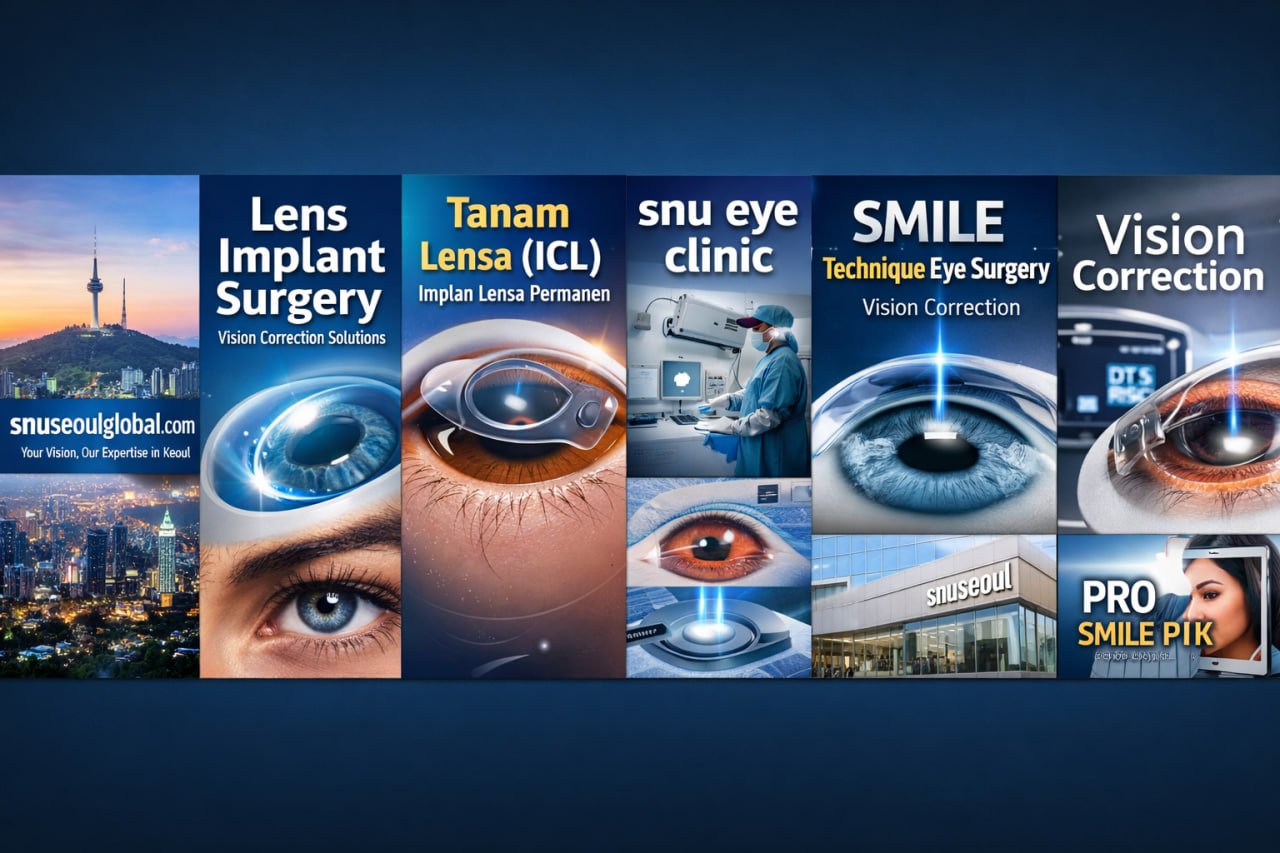
Patients exploring global treatment options often discover SNU Eye Clinic through international platforms such as https://snuseoulglobal.com, where they can learn about procedures ranging from Smile lasik to Lens Implant Surgery. With university-level expertise and modern diagnostic tools, the clinic has become a trusted destination for individuals seeking advanced Vision Correction solutions.visit Смайл про
Understanding Tanam Lensa ICL in Modern Eye Surgery
Tanam Lensa (ICL) refers to the surgical implantation of a specially designed lens inside the eye to correct refractive errors. Unlike traditional LASIK procedures that reshape the cornea using lasers, ICL surgery works by inserting a thin biocompatible lens between the iris and the natural lens.
This method allows light to focus properly on the retina, producing sharp and stable vision. In many countries, the procedure is also referred to as Lens Implantation or Интраокулярные линзы implantation.
Because the cornea remains untouched during the surgery, Tanam Lensa ICL can be an excellent option for patients with thin corneas or extremely high myopia. For many individuals who cannot undergo laser surgery, this technology offers a safe and effective alternative.
Modern ICL biotech lenses are made from advanced materials that allow oxygen and fluid to circulate naturally within the eye, improving safety and reducing postoperative complications.
The Role of ICL Biotech Technology in Vision Correction
ICL biotech represents a new generation of implantable lens design that focuses on safety, optical clarity, and long-term stability. These lenses are engineered with precision to match the natural structure of the eye.
One of the most widely recognized innovations in this field is the Visian ICL V4C FDA approved model. This lens includes a central port that improves the flow of aqueous humor inside the eye, eliminating the need for additional procedures previously required in earlier lens models.
Patients researching procedures online may encounter international terminology such as Имплантация линз, Линзсуулгахмэсзасал, and Болорсолих, which all refer to similar forms of lens implantation.
At snu eye clinic, surgeons evaluate each patient through detailed diagnostic tests including corneal mapping, retinal imaging, and refractive measurements. These evaluations ensure that the implanted lens perfectly matches the patient’s visual requirements.
Because of these advancements, ICL procedures are now considered one of the most precise methods of correcting severe refractive errors.
Laser Vision Correction and Its Alternatives
Although implantable lenses have become increasingly popular, laser-based procedures remain an essential part of modern ophthalmology. Treatments such as LASIK, LASEK, and Smile lasik are widely performed around the world.
In many countries, patients researching vision correction may encounter terms like Лазерная коррекция зрения or Koreksi Penglihatan, referring to laser vision correction procedures.
Advanced technologies such as the smile pro machine and 全飞秒 laser systems allow surgeons to reshape the cornea with remarkable accuracy. The smile technique eye surgery uses a small incision and specialized laser to remove a tiny piece of corneal tissue, correcting refractive errors with minimal disruption.
Discussions on online communities often explore topics like 라식 vs 라섹 디시 comparisons, highlighting differences between LASIK and LASEK procedures. While both methods are effective, their suitability depends on the patient’s corneal thickness and overall eye health.
For individuals who cannot undergo laser surgery, Tanam Lensa ICL remains one of the most reliable alternatives.
International Interest in Seoul’s Vision Correction Clinics
South Korea has become a global center for advanced medical treatments, including ophthalmology. Many patients travel to Seoul specifically for refractive surgery due to the country’s reputation for technological innovation and highly trained surgeons.
At SNU Eye Clinic, international patients receive specialized consultation and treatment planning tailored to their needs. Platforms such as snuseoulglobal.com/ru and snuseoulglobal.com/vi help patients from different countries understand procedures in their own languages.
Global discussions about eye surgery often include references to clinics in places like Austin, Texas or Orange County. Searches for lasik eye surgery Austin or evo visian icl orange county show that many patients compare international options before choosing a clinic.
Despite regional differences, the core objective remains consistent: restoring clear vision through safe and precise medical techniques.
Recovery and Postoperative Care for Lens Implant Surgery
After undergoing Tanam Lensa ICL surgery, patients typically experience rapid improvement in their vision. Most individuals notice clearer eyesight within a few days, although full stabilization may take several weeks.
Doctors emphasize the importance of proper postoperative care. Instructions related to 스마일 라식 관리 or other recovery guidelines help protect the eyes during the healing process.
During follow-up appointments, surgeons monitor the position of the implanted lens and ensure that the eye is healing correctly. Because modern ICL biotech lenses are designed to remain stable inside the eye, long-term results are usually excellent.
While some online discussions mention concerns about icl-operation komplikationer, clinical studies show that complications are rare when procedures are performed by experienced surgeons using modern equipment.
The Future of Implantable Lens Technology
Advances in ophthalmology continue to reshape the possibilities for vision correction. Researchers are developing new materials, improved surgical tools, and advanced diagnostic technologies that will further enhance the safety and effectiveness of lens implantation procedures.
Innovations such as pro smile systems, dts pro smile design, and enhanced imaging technologies allow surgeons to plan procedures with extraordinary precision.
As technology evolves, implantable lenses may become even more adaptable, offering customized solutions for a wider range of vision problems.
Through the combination of academic expertise, advanced technology, and personalized patient care, SNU Eye Clinic in Seoul continues to remain at the forefront of global Vision Correction research and treatment.